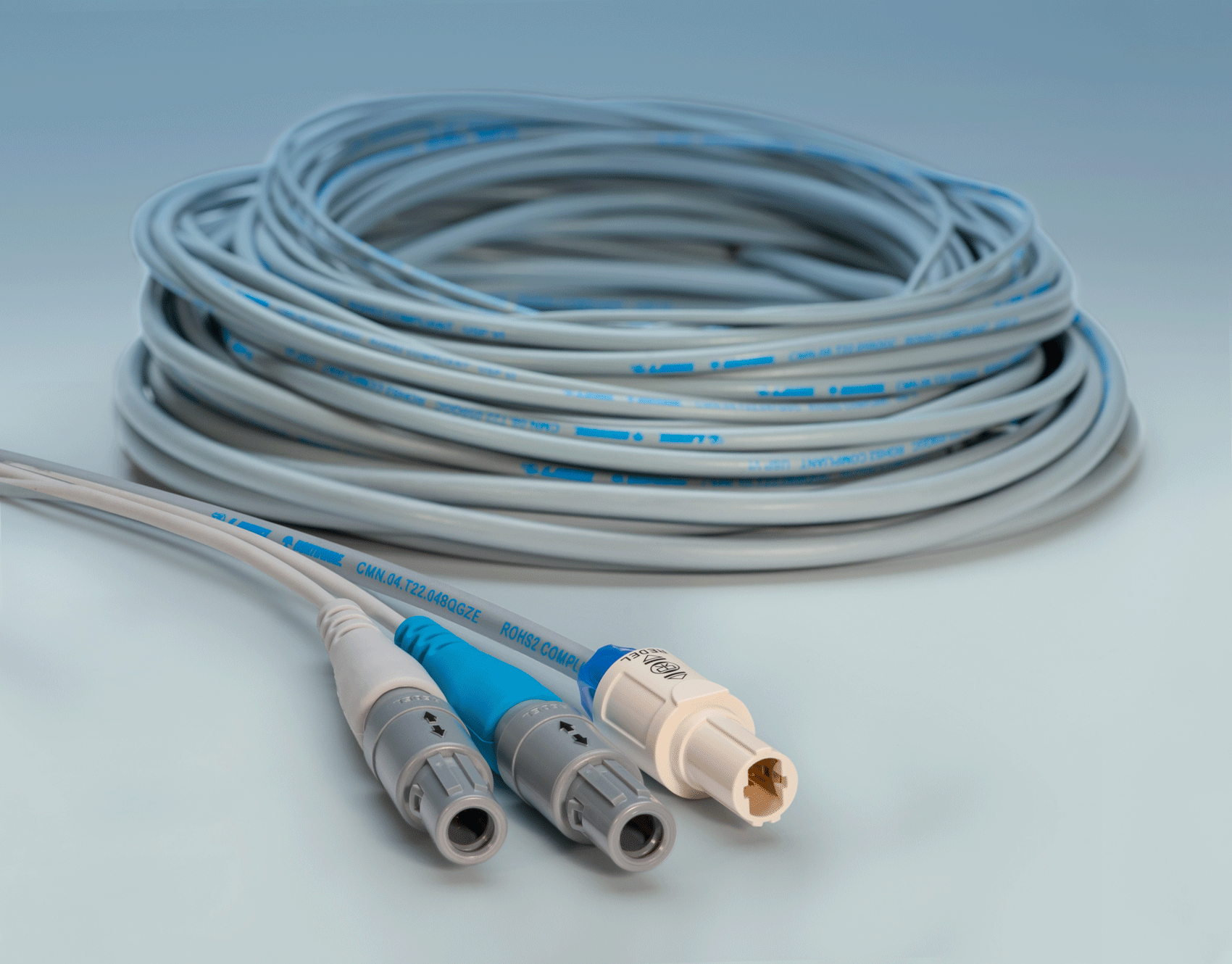
Key Considerations in the Design and Manufacture of Medical Cables


Medical device cables are critical components in a wide range of diagnostic, therapeutic and surgical devices. Their performance directly impacts patient safety, device reliability and clinical workflows.
Effective medical cable design requires careful consideration of conductor construction, insulation, shielding, component integration and jacketing materials. Each element plays a critical role in meeting the electrical, mechanical and regulatory requirements of the intended application.
Northwire’s white paper, Key Considerations in the Design and Manufacture of Medical Cables, takes a comprehensive "copper up" approach to medical cable design, exploring the materials, construction techniques and performance considerations that influence cable reliability. It provides valuable technical insight for medical device OEMs, engineers and regulatory professionals developing medical interconnect solutions.

Copper Conductors: The Foundation of Medical Cable Performance
The primary function of most medical cables is to transmit electrical power and/or signal from one point to another. Selecting the appropriate conductor construction is essential for achieving the required electrical performance, flexibility and durability.
Conductor gauge size is typically determined by using established tools that factor in current, voltage, temperature and cable length. However, high-voltage, low-duty-cycle applications such as Pulsed Field Ablation (PFA) may require deeper pulse analysis and more rigorous testing.


Once conductor gauge or circular area is determined, engineers must evaluate several construction characteristics, including:
Strand Count: Higher strand counts improve flexibility and reduce skin effect at high frequencies but increase cost.
Strand Configuration: Concentric, semi-concentric, unilay, bunched and rope-lay constructions offer different performance characteristics.
Lay length: Influenced flexibility and overall cable construction
Conductor Plating: Nickel, silver, tin and bare copper offer different performance and cost advantages. Silver provides top performance at a higher cost, while bare copper is the least expensive but corrodes easily.
Other important selection factors include flex life, outer diameter (OD), strip-ability, signal type and frequency, tensile strength and DC resistance.
Copper is the most used conductor material in medical cables, although alloys and tinsel wire may be incorporated for specialized applications.
Insulation: Protecting Signal and Structure
In addition to providing electrical isolation, insulation also enhances signal integrity in high-frequency cables by reducing electromagnetic interference (EMI) and crosstalk. It also protects against abrasion, moisture, chemicals and thermal extremes.

Key Considerations for Wire Insulation
Selecting the appropriate insulation requires evaluating the following:
Dielectric Strength and Wall Thickness: Support electrical isolation and voltage requirements
Flexibility: Accommodates bending and movement during operation
Temperature Stability: Maintains performance across the intended operating temperature range
Strip-ability: Supports efficient cable processing and assembly
Chemical Resistance: Protects against exposure to cleaning agents and other chemicals
Common insulation materials include fluoropolymers, polyamides, polyesters, polyolefins, PVC, thermoplastic elastomers and silicone rubber and silicone alternatives.
Each material offers distinct properties, making selection dependent on the cable’s electrical, mechanical and environmental requirements.
Additional Components for Complex Medical Cable Applications
Nearly every medical cable contains components beyond just the inner copper conductors, insulation and outer jacket.

Coaxial Conductors: Supports high-frequency signal transmission or medical imaging applications
Fiber Optics: Multi-mode, single-mode and plastic optical fiber (POF) support data transmission or illumination of surgical sites
Fluidic/Gas Tubes: Transport gases or liquids, integrated into a single jacketed cable for cleaner interconnects
Shielding: Foil, spiral serve, braided shielding providing EMI protection, often layered over sub-bundles, pairs, or the entire cable core.
Tapes and Fillers: Maintain cable shape, improve flexibility, reduce internal friction and ease removal of jacket during assembly
Cable Layout and Construction: Balancing Electrical and Mechanical Performance
After defining all key cable components, the cable design engineer will layout the components in the final cable design. This is commonly depicted as a single, 2D cable cross-section, though the actual 3D structure varies along the length, especially with twisted pairs, triads or sub-bundles. Conductors shift positions within the bundle, moving from center to edge and rotating around the cable core.

Component placement, twist rates, and layout greatly impact electrical and mechanical performance, affecting crosstalk, EMI and flexibility. Friction between components influences flexibility, which designers manage using various fillers and tapes.
When additional protection against electromagnetic interference is required, shielding becomes another important consideration in the overall cable design.
Shielding: Maintaining Signal Integrity in Medical Devices
Effective EMI shielding is vital for signal integrity and regulatory compliance. Key considerations include frequency, percent of coverage desired, flexibility, protection, OD, weight, termination/grounding and cost.

Foil Shielding: Provide full coverage and are ideal for high-frequency applications. However, they reduce flexibility and can be more difficult to terminate.
Spiral or Serve Shielding: Offer excellent flexibility and moderate EMI protection, making them useful for applications requiring frequent movement. However, gaps may develop in the shielding during bending.
Braided Shielding: Provide the best physical protection and are less prone to developing gaps than spiral shields, although they offer less flexibility.
When selecting shielding, design engineers should consider the highest frequencies involved and follow best design practices like the 1/20th wavelength rule.
Medical Cable Jacketing: Balancing Safety, Flexibility and Durability
The outer jacket is the cable’s primary interface with its operating environment. For medical applications, jacket design must balance safety, durability, flexibility and regulatory compliance.
Key Considerations for Medical Cable Jackets
Biocompatibility: Materials must be non-toxic and meet ISO and FDA standards; common biocompatible options include silicone, BioCompatic® (TPE) and polyurethane.
Chemical & Sterilization Resistance: Jackets must endure cleaning agents and disinfectants; BioCompatic® and silicone offer strong durability under various sterilization methods.
Flexibility & Durability: The cable must withstand repeated flexing and mechanical stresses; for instance, polyurethane is durable but may be less flexible than BioCompatic®.
Environmental Resistance: The material must resist factors like temperature extremes and moisture to ensure long-term performance.
Aesthetic & Tactile Qualities: Appearance and feel impact user confidence, small flaws can lead to rejection in clinical settings.
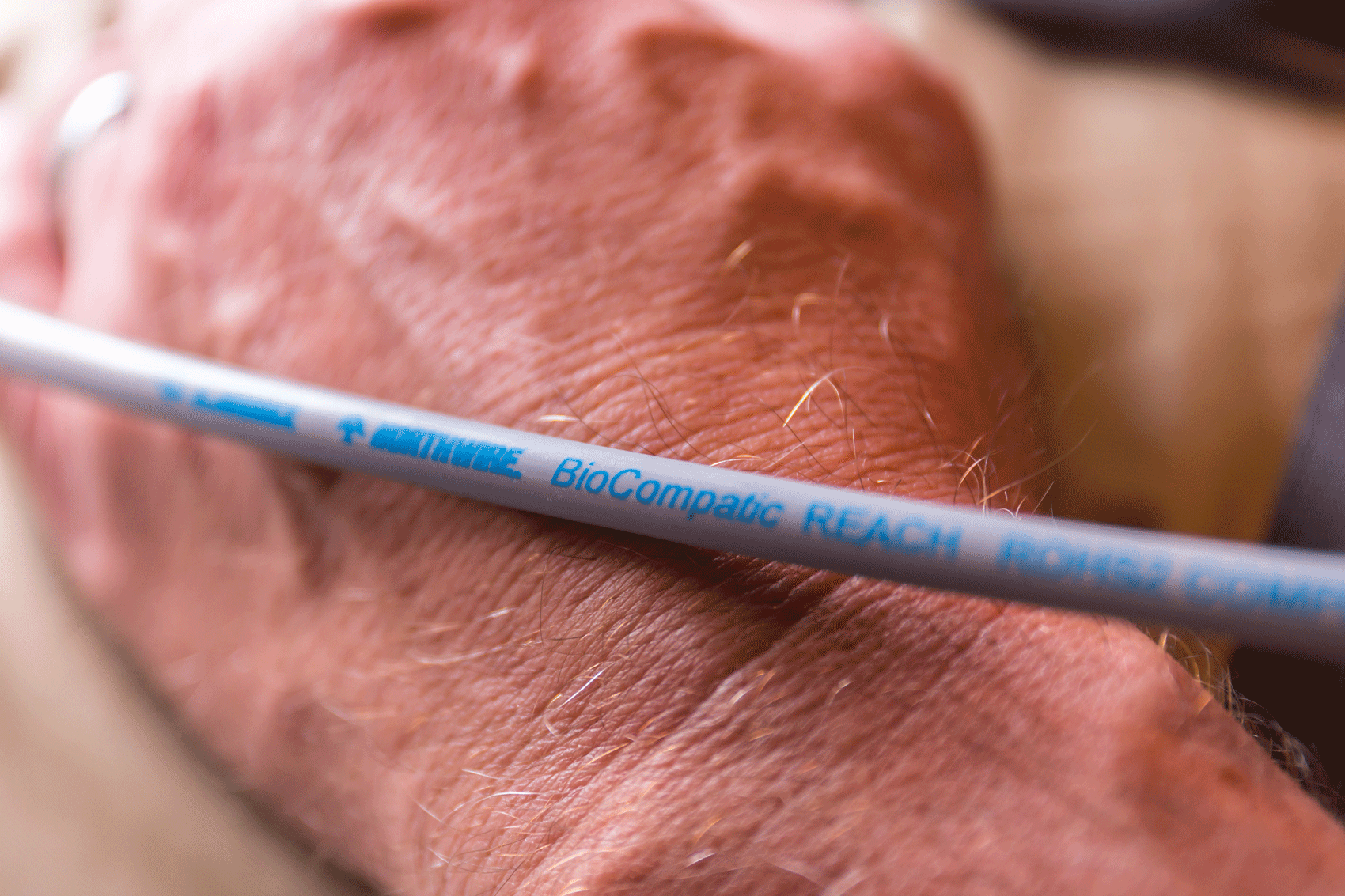
Selecting the right jacket material is critical for medical devices requiring flexibility, durability and resistance to cleaning and sterilization processes.
Northwire’s BioCompatic® offers a biocompatible, USP Class VI silicone alternative with superior resistance to chemicals, cuts, crush and abrasion. Designed to withstand repeated sterilization and flexing, it also offers shorter lead times and lower production costs compared to traditional silicone jacketing.
Custom Medical Cable Solutions Backed by Engineering Expertise
The design and manufacturer of medical cables require a comprehensive, informed approach, where every component, from conductor construction to the outer jacket, contributes to overall performance and compliance
With decades of experience partnering with medical device OEMs and contract manufactures, Northwire combines custom cable engineering, specialized material expertise and precision manufacturing to develop interconnect solutions tailored to demanding medial applications.
Our medical cables are manufactured under strict quality standards to ensure reliability and patient safety. Northwire is ISO 13485:2016 certified and compliant to USP Class VI, ISO 10993-5:2009 and ISO 10993-10:2021and RoHS3 standards.
For more detailed guidance on medical cable design and manufacturing , explore our white paper, Key Considerations in the Design and Manufacturer of Medical Cables.