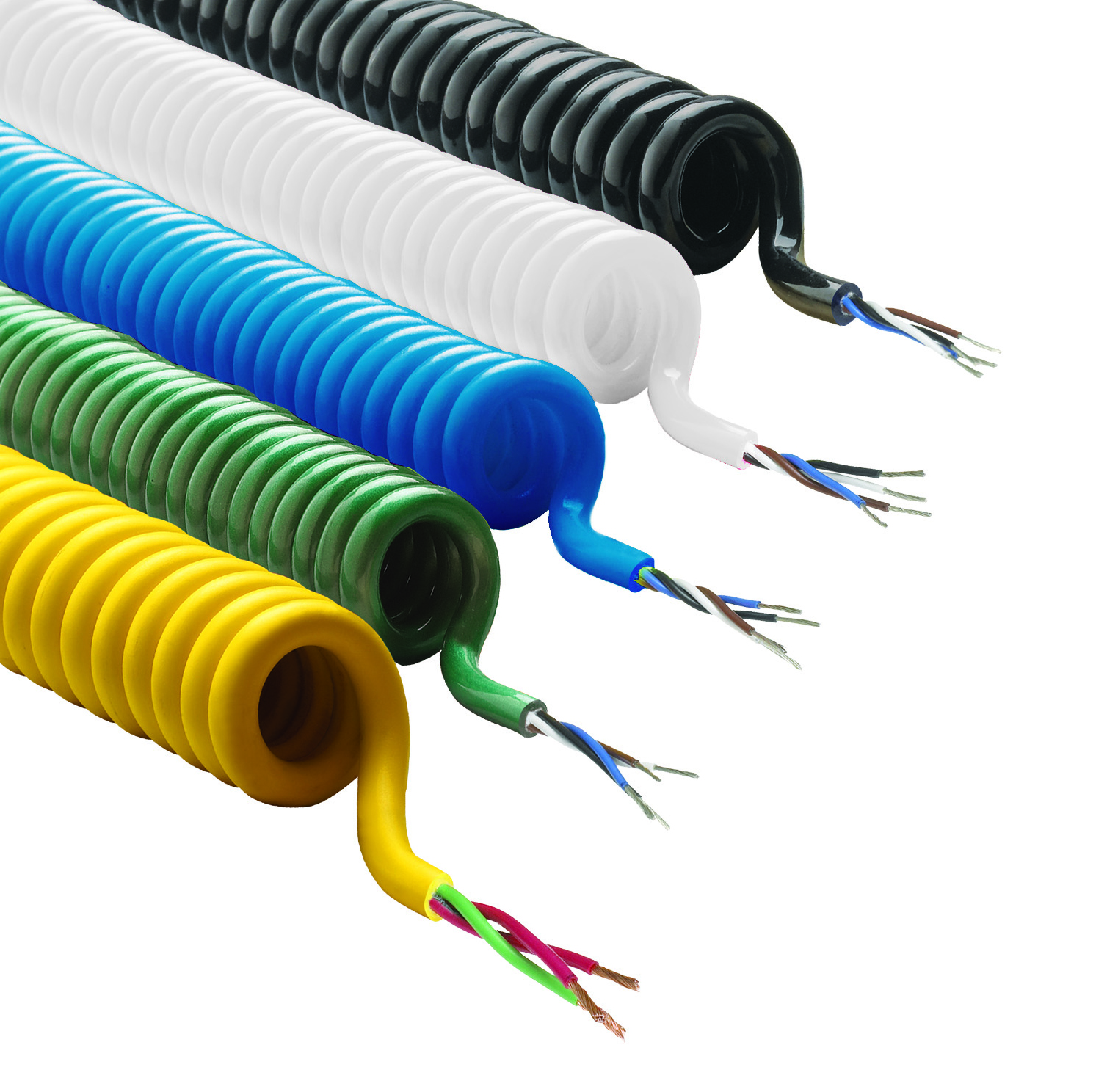
Composite Cable Capabilities for Motors and Drives in Modern Industrial Automation


Composite Cable Capabilities for Motors and Drives in Industrial Automation
Motors and drives have become increasingly important in industrial automation, offering precise motion control while controlling speed and torque in industrial power machinery.
In industrial environments, motors and drives require power and data connections that can withstand continuous motion, extreme temperatures, vibration, exposure to moisture, and electromagnetic interference.
Achieving high performance of motors and drives depends on reliable power, signal integrity, and robust cable design. Composite cables play a key role in supporting these requirements by integrating power, data, control and other functions into a single cable. As a result, they can help simplify routing and installation while optimizing the cable construction around the application’s requirements.
This article will examine the role, key capabilities, and overall significance of composite cables in motor and drive systems.
What are motors and drives?
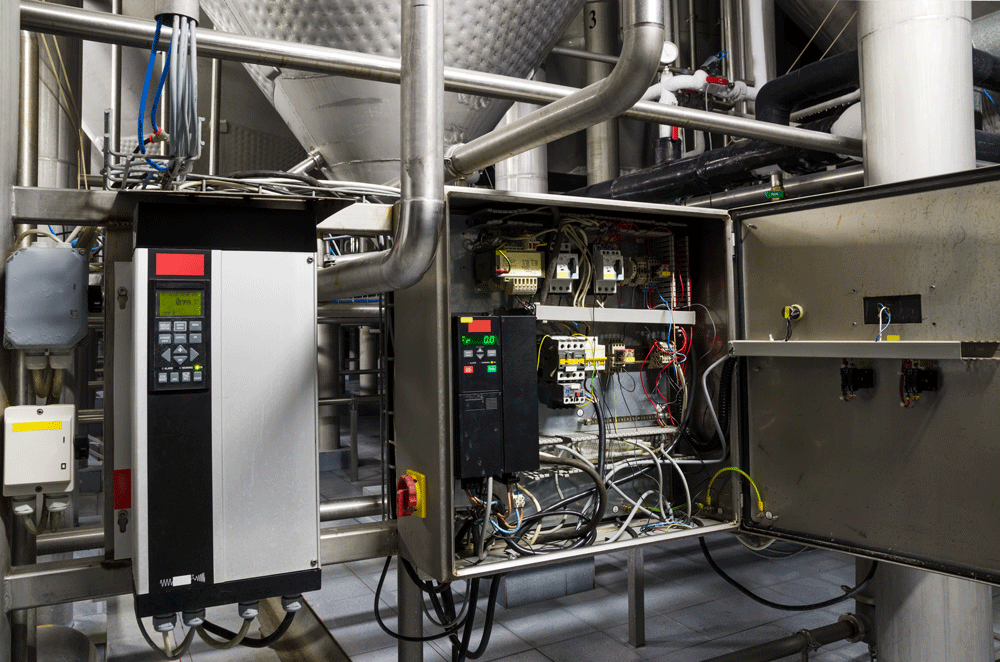
Motors – such as AC, DC, stepper and servo – convert electrical energy into mechanical motion, powering machines with rotational or linear force.
Drives – such as Variable Frequency Drives (VFDs) and servo drives – control the motor by regulating the amount and frequency of electricity supplied, enabling precise speed and torque control for automated operation.
Together, they enable precise control of key performance variables, including speed of the motor, torque of the motor shaft, and position of the motor shaft.


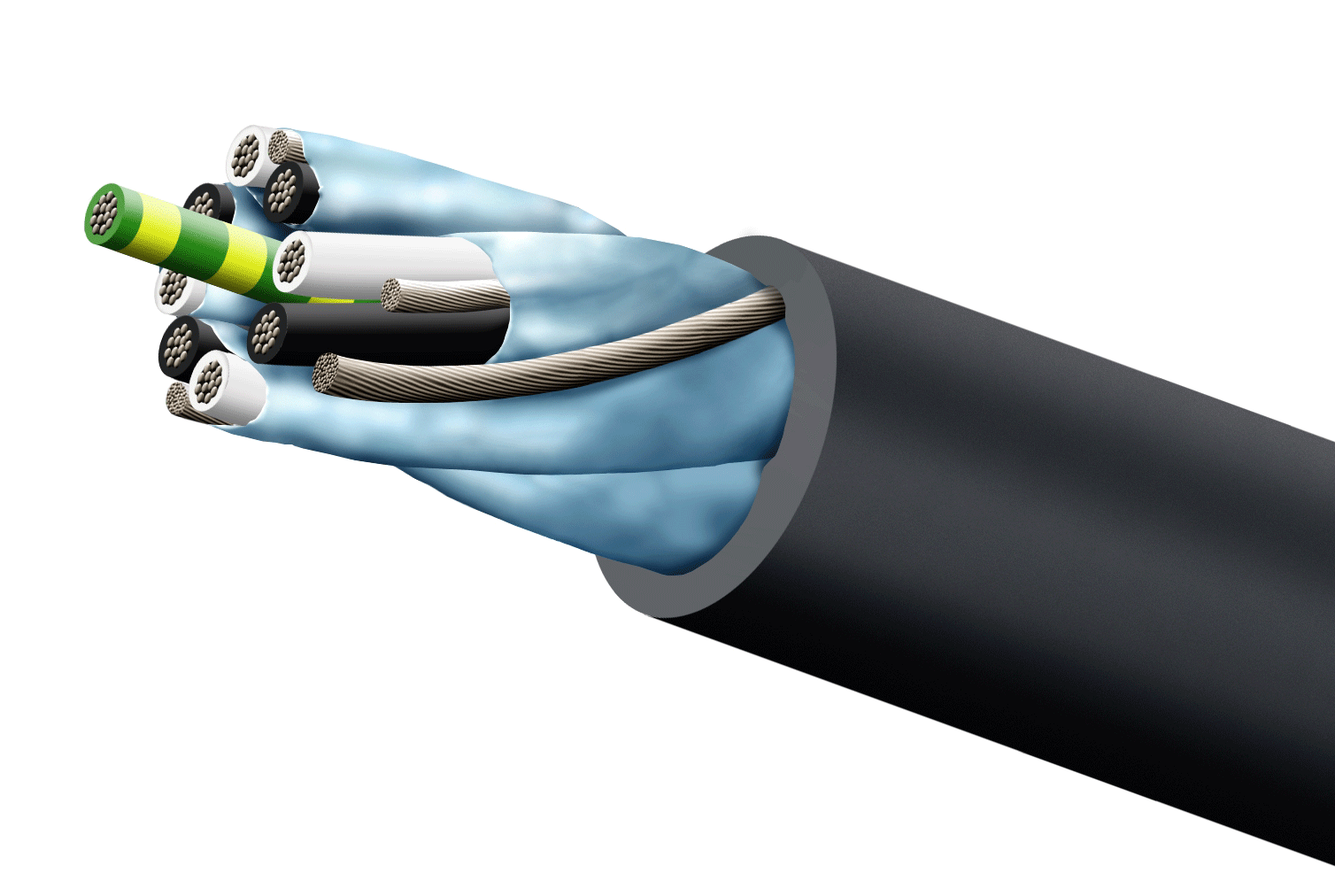
Composite cables combine different types of components and wire gauge sizes allowing a single cable to support multiple functions such as transmitting power, control and data transfer simultaneously in one cable.
By consolidating multiple cable functions into a single solution, composite cables help create more efficient, reliable and easier-to-install motor and drive systems.
This allows the cable construction to be optimized around the application’s electrical, mechanical and environmental requirements.
Composite cables can also:
-
Reduce the number of cables, connectors and tie / support points required.
-
Minimize overall cable OD.
-
Improve aesthetics with cleaner cable trays and control cabinets.
-
Simplify routing and reduce installation time and labor costs.
-
Provide a more cost-effective solution than managing multiple individual cables.
-
Promote more uniform cable movement and wear within flexing or drag chain applications.
Defining requirements early and collaborating with Northwire’s design team during your design planning phase ensures your custom composite cable will be designed for optimal manufacturing efficiency while meeting your specific motor and drive system requirements.
Northwire’s Key Capabilities of Composite Cables in Motor and Drive Applications
As an industry leader, Northwire specializes in the design and manufacture of custom composite cables. Our engineering expertise in materials selection, shielding, flex performance, testing and manufacturing helps address the unique challenges of motor and drive applications.
Mechanical Durability
EMI Protection
Extended Service Life
Environmental Resistance
Customization
Low Minimum Order Quantities
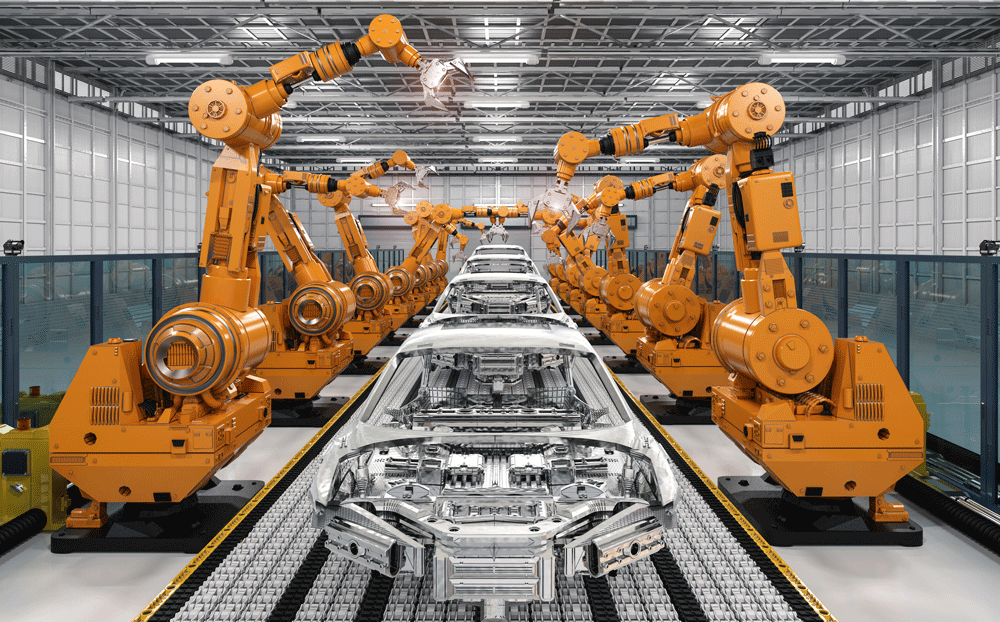
In demanding industrial environments, composite cables built with industry-compliant materials and appropriate regulatory ratings help motor and drive systems withstand exposure to harsh environmental conditions and continuous motion, ensuring long-term reliability and reduced downtime.
Composite cables provide an efficient solution for motor and drive systems by combining multiple functions into a single cable to reduce clutter, simplify installation, and improve reliability. Custom cable solutions help support reliable operation in industrial automation applications.
By utilizing specialized materials and construction techniques, Northwire’s custom composite cables can withstand demanding environments, while delivering high-performance data, power transfer and control. Defining requirements early and collaborating with Northwire’s design team helps ensure the cable solution is optimized for the application’s specific performance requirements.
Northwire is committed to continually developing and innovating new materials and techniques to meet the evolving needs of industrial automation applications.